2025 GEO Optimization Pitfalls: Beware of Paid Inclusions, Fake Rankings, and Unethical Practices

As artificial intelligence continues to evolve, its impact on how consumers access information is becoming undeniable. Traditional shopping methods are gradually being replaced by AI-driven search platforms like ChatGPT and Google AI, where users now turn for product recommendations, solutions, and services. For businesses, this shift presents a huge opportunity—but it also introduces a challenge: how can brands ensure they are seen and recommended by AI search engines?
To rise above the noise in this new AI-powered ecosystem, many businesses are turning to GEO (Generative Engine Optimization) to optimize their content and gain visibility. However, while GEO optimization promises improved search ranking and increased exposure, many brands misunderstand its gradual nature and overestimate its immediate impact. In reality, the process is far from instant, and success requires patience, consistency, and a deep understanding of how AI platforms work.
In this article, we will explore the challenges businesses face with GEO optimization, debunk common myths, and provide actionable insights to help you navigate the process and achieve long-term success in the evolving world of AI search.
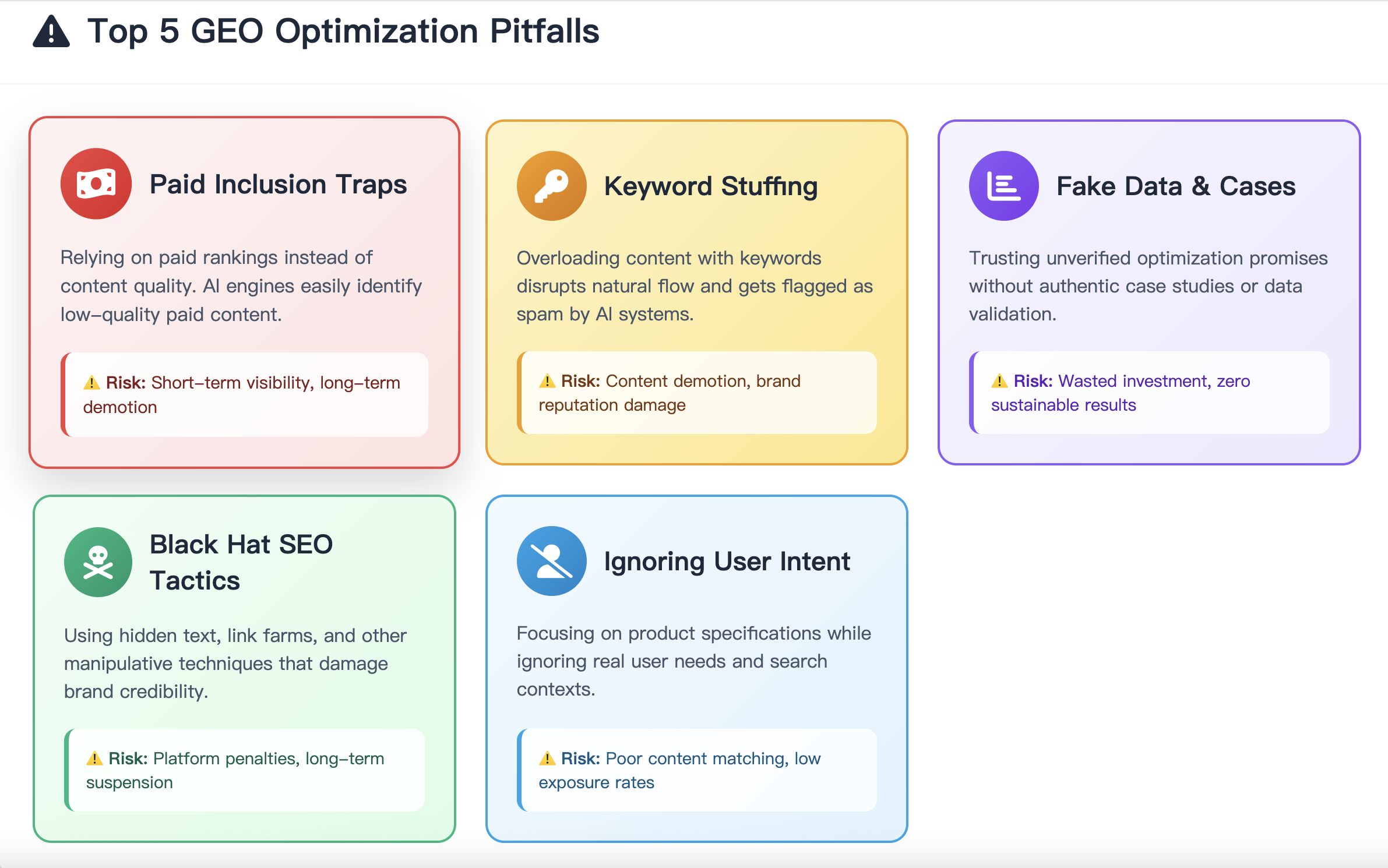
1. Beware of Paid Inclusion and Fake Rankings
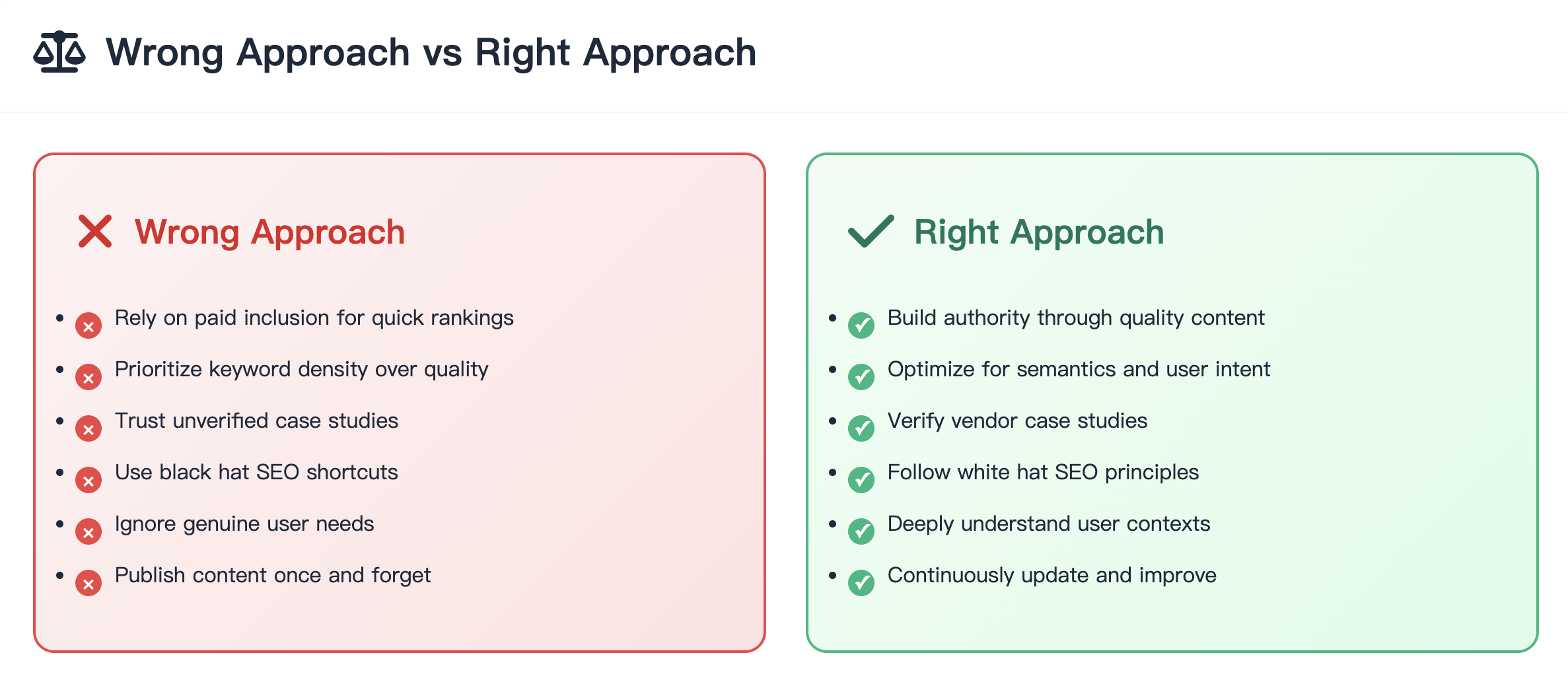
Some services claim to help brands quickly gain AI search exposure by offering paid inclusion or fake rankings. These services promise to place brands on “popular rankings” or “top keywords” through paid methods, but these often do not meet the AI search engine’s optimization standards.
Why This Practice Is Not Recommended:
AI search engines, especially ChatGPT and Google AI, do not rely on paid rankings. They focus more on content’s real value and relevance. Paid inclusion often cannot provide content that meets user needs and can easily be flagged by AI engines as low-quality content, affecting brand visibility in searches.
Recommendation:
Brands should avoid relying on short-term methods that don’t align with AI’s rules. The best approach is to use GEO optimization to improve content quality and relevance, rather than depending on paid systems or fake rankings.
2. Avoid Over-Reliance on Keyword Stuffing
In traditional SEO, keyword density often determines how well a page ranks. Many brands still habitually stuff content with excessive keywords in an attempt to boost their ranking on AI search engines. While this practice may briefly increase keyword exposure, it’s ineffective for GEO optimization.
Why Keyword Stuffing Is Ineffective:
Generative AI search engines don’t rely on simple keyword density. They focus on understanding context, analyzing user intent, and assessing content quality and relevance. Over-stuffing keywords can cause the content to lose its natural flow, and AI engines may label it as “spam” content, which reduces brand exposure.
Recommendation:
GEO optimization emphasizes matching content with user intent. Therefore, brands should focus on expressing user needs in the content rather than simply stuffing it with keywords. By optimizing the content’s semantic structure and aligning it with user scenarios, brands can increase its natural visibility on AI search engines.
3. Be Cautious of Fake Data and False Case Studies
Some GEO service providers may present false optimization data or case studies, claiming that through their services, brands can quickly increase AI visibility and search ranking. These promises can be tempting, but it’s important to remain cautious as these services might not have effective optimization strategies or may rely on short-term tactics that could ultimately damage the brand’s AI visibility.
Why Fake Data Affects Optimization:
AI search engines are highly focused on content authenticity and relevance. Using fake data or improper optimization methods can be recognized as fraudulent by search engines, potentially causing content to be downgraded or completely excluded. Therefore, when selecting GEO optimization service providers, businesses must verify the authenticity of the data and case studies provided.
Recommendation:
Choose reputable GEO service providers with real case studies and verify their performance. Use industry evaluations, third-party assessments, and customer feedback to validate the effectiveness of their services.
4. Avoid Using Black-Hat SEO Techniques
Black-Hat SEO refers to using unethical methods (such as hidden text, link farms, clickbait, etc.) to artificially boost rankings. While this might work in the short term, these tactics harm the reputation and exposure of content in GEO optimization.
Why Black-Hat SEO Is Not Suitable for GEO:
Generative AI search engines prioritize user intent and content quality, rather than ranking through unethical means. Using Black-Hat SEO techniques can lead to penalties from AI engines, damage a brand’s reputation, and undermine long-term exposure.
Recommendation:
Stick to White-Hat SEO and best practices for GEO optimization. Avoid using any fraudulent methods that don’t align with AI search engine guidelines. Ensure content is of high quality, legitimate, and relevant to gain favor from AI engines.
5. Avoid Ignoring User Intent and Contextual Optimization
The core of GEO optimization is user intent and contextual matching. Many brands, when optimizing content, overlook these two factors, focusing only on product features or technical specifications. This approach not only fails to meet user needs but can also significantly reduce content exposure.
Why Ignoring User Intent Affects Results:
AI search engines match content based on user query intent and the search context, rather than just relying on keywords or product information. If brand content isn’t optimized to meet the user’s actual needs, AI engines won’t be able to understand its value, resulting in reduced brand exposure.
Recommendation:
When doing GEO optimization, deeply understand the needs and intentions of your target audience. Ensure content aligns closely with real search scenarios, and optimize it to improve both user experience and brand exposure.
Practical Tips: How to Improve GEO Optimization
In practice, the success of GEO optimization doesn’t just rely on theory and tools—it requires businesses to focus on user needs, follow industry standards, and adjust strategies flexibly. Here are some practical tips to help businesses avoid pitfalls and improve their GEO optimization efforts.
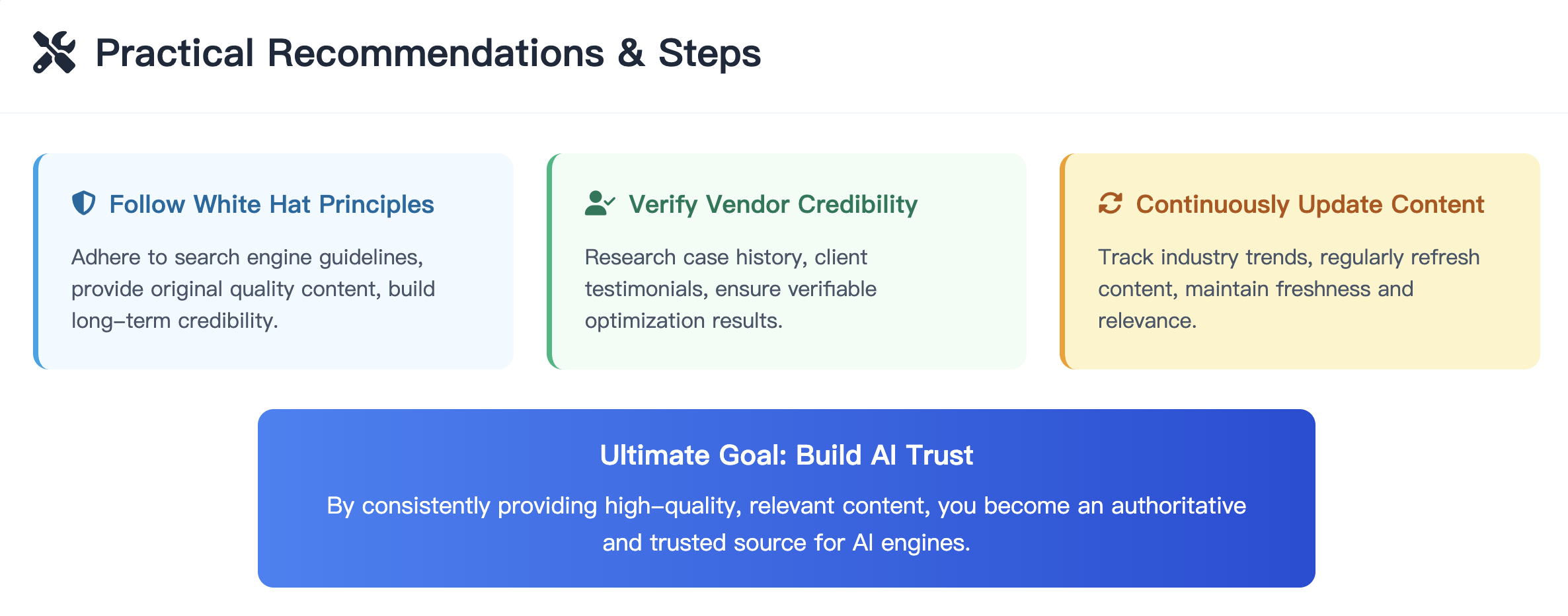
1. Stick to White-Hat SEO and GEO Optimization Best Practices
It is crucial to avoid using Black-Hat SEO tactics during GEO optimization. While they may provide short-term ranking boosts, these tactics will negatively impact AI search engines in the long term. Instead, combining White-Hat SEO with GEO optimization ensures a healthy, long-lasting brand presence.
Recommendation:
Follow the AI search engine guidelines, and avoid using tactics like hidden text or fake links. Ensure all content is original and of high quality to bring real value to users.
2. Choose a Reputable GEO Service Provider and Verify Data
Choosing a reliable GEO service provider is key to optimization success. There are many companies offering GEO services, but their effectiveness and service quality can vary. Businesses should carefully select providers and verify their services through third-party assessments and real case studies.
Recommendation:
Investigate the service provider’s background, history, and success stories. Request actual case studies and performance data to ensure results are verifiable and not based on empty promises.
3. Continuously Update Content to Stay Relevant
AI search engines place high value on freshness and relevance of content. As technology evolves, so do the criteria AI engines use to evaluate content. If businesses fail to update content regularly, outdated information may lose visibility, affecting its ranking on AI platforms.
Recommendation:
Regularly update content to stay relevant to market changes and user needs. Keep track of industry trends and adapt content to align with these updates. Also, pay attention to seasonality and trends to keep content fresh and engaging.
Conclusion: Successfully Implementing GEO Optimization for Long-Term Success
Through these practical tips, businesses can better understand GEO optimization, avoid common pitfalls, and increase their brand’s exposure and conversion rates on AI search engines. By focusing on user intent, content quality, and maintaining long-term optimization efforts, brands can leverage GEO to gain sustained visibility and trust on AI platforms.
Dr. Huina Mao: A "National Leading Talent" in the field of artificial intelligence. She holds a Ph.D. in Informatics from Indiana University, USA, with 15+ years of R&D experience in AI and NLP. A pioneering scholar who first proposed the "Twitter Mood Index," she has published 30+ academic papers cited over 10,000 times and holds multiple U.S. patents. Her research findings have been featured in 150+ international media outlets, including CNN, BBC, and TIME Magazine. She was honored among TIME Magazine's "50 Best Inventions" (2011) and received the "Outstanding Young Scientist Award" from Oak Ridge National Laboratory, one of the world's top ten leading laboratories.